Donkey Lab Brand Identity: Designing Our Own Brand
A logo on its own is not a brand. A brand is the impression people get every time they meet your company: on a business card, in an email, on the website, on an invoice. Corporate identity design is the work of making all those moments look and feel like the same company. Here is how we approached it for our own studio, Donkey Lab, and what every business should consider.
What corporate identity includes
Corporate identity is the system of visual rules that a company uses everywhere:
- the logo and its variations
- the colour palette
- the typography
- the style of images and graphics
- the way these elements are combined on every document
When these rules are clear and applied consistently, people recognise the company instantly, even before reading its name.
Corporate stationery: the everyday face of a brand
Stationery is where identity is used most often, and where inconsistency shows first.
Letterheads
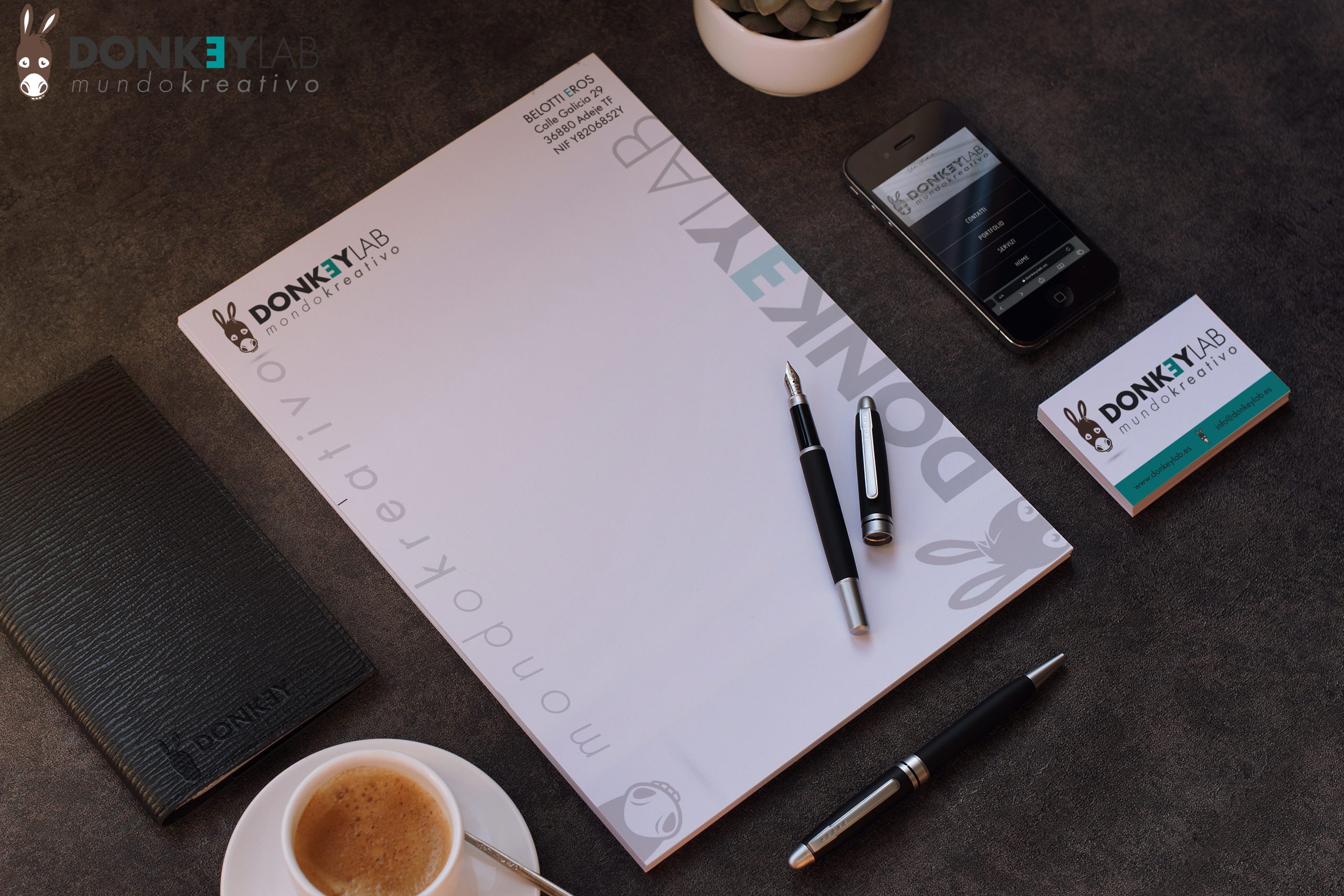
Every letter, quote and contract carries the letterhead. It must include the logo and the company’s details in a clean layout that leaves room for the content.
Business cards
The business card is often the first physical contact with a client. Paper, printing and layout all say something about the company.
Envelopes
A small detail that is often forgotten. The envelope is the first thing a client sees when they receive your documents, and it should belong to the same family as everything inside.
The website: the brand’s window to the world
Today most people meet a company online first. The website has to follow the same identity as the printed material, with the same colours, typefaces and tone. It also has to work: be fast, easy to navigate and optimised for search engines so people actually find it.
Diaries and calendars
Branded diaries and calendars keep the identity present every day, on the desks of the team and of clients. They are practical objects that people keep for a whole year, which makes them one of the most effective promotional items.
Why consistency matters
Every time someone sees your brand, the impression adds up. If the logo looks different on the website and on the business card, or the colours change from one document to another, the impressions do not add up: they cancel out. Consistency is what turns many small contacts into a strong, recognisable brand.
How we build a corporate identity
1. Understanding the company
We start from who the company is, who its customers are and how it wants to be perceived.
2. Logo and visual system
We design or refine the logo and define colours, typography and graphic style.
3. Applications
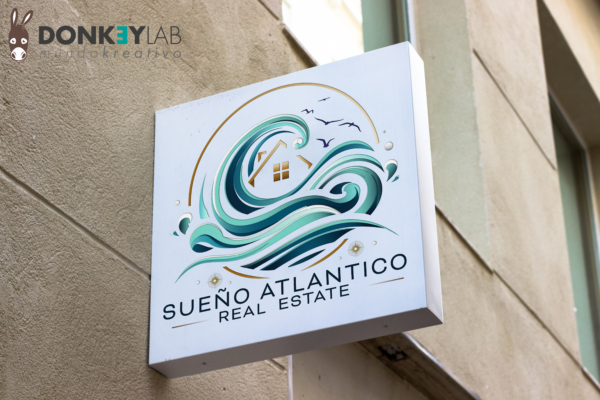
We apply the system to stationery, website, signage, social media and any other material the company uses.
4. Delivery
We hand over all files, ready to print and to use online, with simple rules on how to use them.
Our own identity
As a design studio, our own identity is also our business card. The Donkey Lab identity, with the donkey symbol and the teal colour, is used consistently on our stationery, website, clothing and social media. It is the same approach we bring to our clients.
See how we apply it to clients in our portfolio, and what else we do on the services page.
Signs your identity needs attention
- Your logo looks different on the website, the van and the business cards.
- Every new document is designed from scratch, in a different style.
- The logo file you have is a low-quality image that pixelates when enlarged.
- Customers confuse you with a competitor.
- Your brand no longer reflects what the company has become.
If any of these sound familiar, a review of the identity is usually faster and cheaper than people expect, and it pays off every day in the way customers perceive the business.
Keeping a brand consistent over time
Designing an identity is the first step; using it consistently is what makes it work. Over the years, small inconsistencies creep in: a stretched logo on a flyer, a slightly different colour on a sign, a new typeface on social media. Together they weaken the brand.
A few simple tools prevent this:
- a short brand guide with logo rules, colours and typefaces;
- ready-made templates for documents, presentations and social posts;
- a shared folder with the official logo files, so nobody uses an old version;
- one person responsible for checking new materials before they are published.
We apply the same discipline to our own brand and to the identities we design for clients.
Frequently asked questions
What is the difference between a logo and a corporate identity?
The logo is one element. Corporate identity is the whole system of logo, colours, typography and rules applied to everything the company uses.
Do small businesses need a corporate identity?
Yes. A consistent identity makes a small business look established and trustworthy, often more than its size would suggest.
Can you update an existing identity?
Yes. We can refresh an identity while keeping the elements customers already recognise.
Do you also print the stationery?
We deliver print-ready files and can coordinate printing for you.